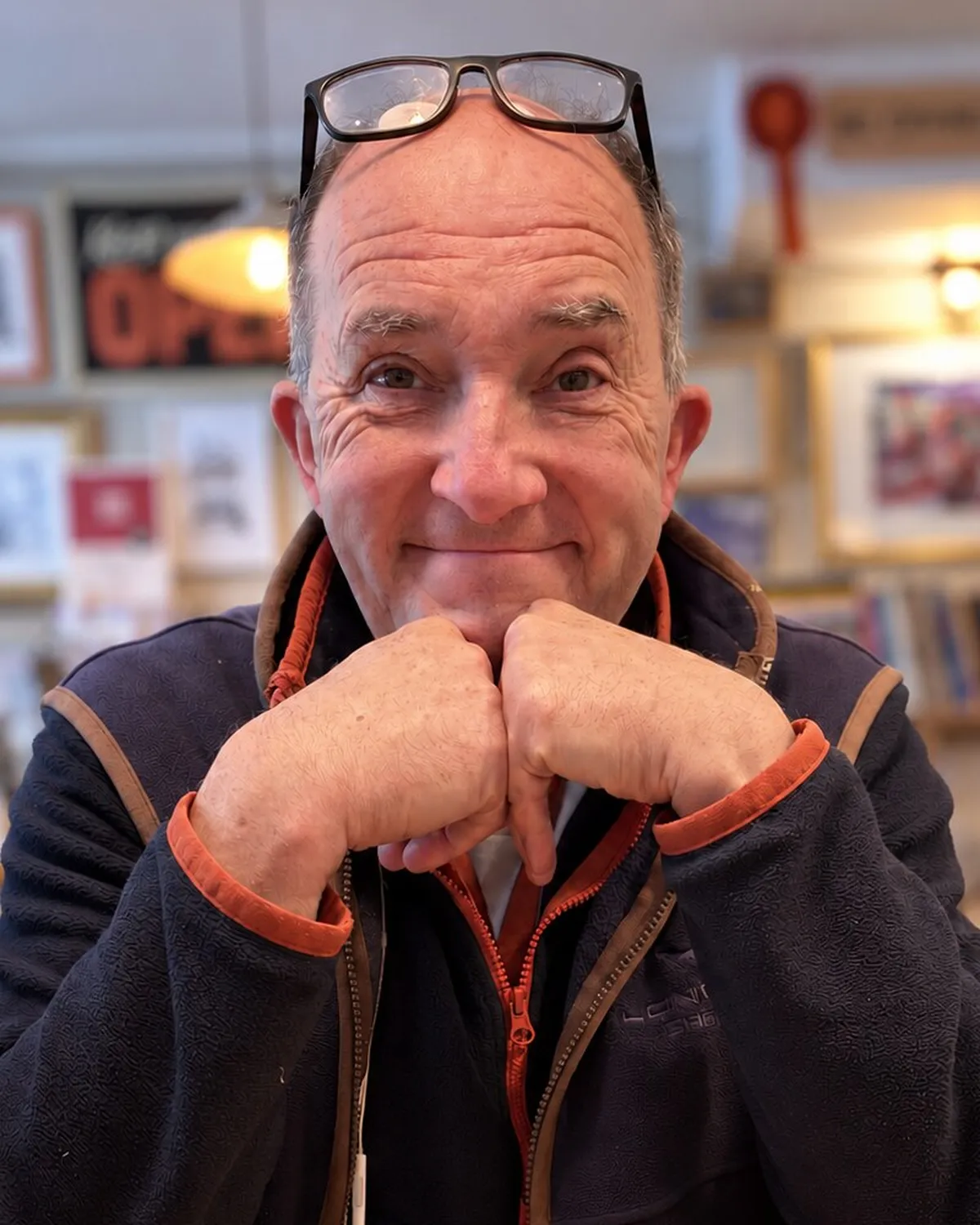
Henry Tierney Diagnosed at sixty-one.
Hidden, not wasted.
ADHD coaching for people who found out late. Mostly in their sixties and beyond, some in their fifties, and nearly all after a very long time wondering.
Six weeks, one to one, an hour a week. £500
What the six weeks involveThere’s nothing to sign up to here, and I won’t email you.
Does this sound like you
Subject
What they wrote
What it meant
Starting things
Shows early promise.
You’ve started things. Good things, some of them, and you can still remember exactly how the first fortnight felt.
Finishing
Loses interest.
Then the drift. Not a decision to stop, nothing as clean as that. Just the thing getting smaller behind you while you looked at something else, like a Viking funeral boat heading off into the horizon, and you standing on the shore wondering what happened.
Conduct
Talks too much.
You’ve been called scattered, or colourful, or a bit eccentric, usually by people who meant it kindly.
Effort
Must try harder.
You’ve searched everywhere for the answer. Books, systems, courses, an app that was going to change everything. Each one worked, for a while.
Application
Could do better.
And there were the days when the shutters came down on the shop. You couldn’t start the one thing you actually wanted to do. Nobody believes that part, because from outside it makes no sense at all.
General
Full of potential.
And underneath all of it, for years, bewilderment. It’s an underused word and it’s the one I keep coming back to. Not misery exactly, and not failure. Just a long puzzlement at why the ordinary business of a life took so much more out of you than it seemed to take out of everybody else.
Underneath that, one question.
What is fundamentally wrong with me?
Nothing is.
That’s not a personal failing. That’s ADHD.
If you’ve just found out
Everyone expects the diagnosis to be the end of it. In my experience it’s a big anti-climax.
You get a name for it, and relief, and then a few days later something a good deal harder than relief, which is working out what all those years were.
Then you’re back at the table with the same Tuesday in front of you, and nobody has told you what to actually do next.
That gap is what this practice is for.
Six weeks, one to one, an hour a week, on Zoom.
It isn’t a course and it isn’t more information. You’ve got plenty of information.
- How long it runs
- 6 weeks
- Weekly sessions
- 6
- Follow-ups after
- 3
- What it costs
- £500, all in
- Where
- Sessions are on Zoom, with live captions on by default.
Recognition, not transformation.
Scaffolding, not a fix.
If you’re in work, there’s a grant for this
If you’re in paid work in England, Scotland or Wales, Access to Work may pay for coaching. It’s a government grant, you don’t pay it back, it doesn’t affect your other benefits, and you don’t need a diagnosis to apply. There are a few conditions, and the next page sets them out plainly.
That’s a different programme from the six weeks above. It’s twelve sessions and it’s about work.
I’m already delivering it, and have been for a while.
If you’re here for someone you love
Some people reading this aren’t reading it for themselves.
Maybe a grandchild got diagnosed, and the form came home, and half of it described somebody else in the family. Somebody older. Somebody you’ve been watching for a long time without having the words for what you were watching.
You can’t hand a person a diagnosis, and it usually goes badly when people try. What you can do is find out what’s on the other side of the door before you mention it, so that if they ever ask you, you’ve got something better than a leaflet.
Coaching, not therapy
I should say this plainly, rather than let you find it out later.
I’m a coach. I’m not a therapist and I’m not a clinician, and I can’t tell you whether you have ADHD. If what you’re carrying needs somebody with different training, I’ll say so, and I’ll try to point you somewhere better placed.
Who I am, briefly
I spent thirty years as a headhunter.
In 2013 a psychiatrist looked at a folder I’d spent months preparing and told me I didn’t have ADHD. I believed him for ten years. I’d paid an expert to tell me, and that’s what he told me.
I’ve had a long time to be fair about that. Adult ADHD was understood well enough by 2013 that it should have been on the table. It just wasn’t on the table in that room.
I was diagnosed in 2023.
I’m training as a coach now, and I’ve decided I’m working until I’m eighty-four.
If this feels familiar to you, we can have a conversation.
info@hiddentalents.co.uk